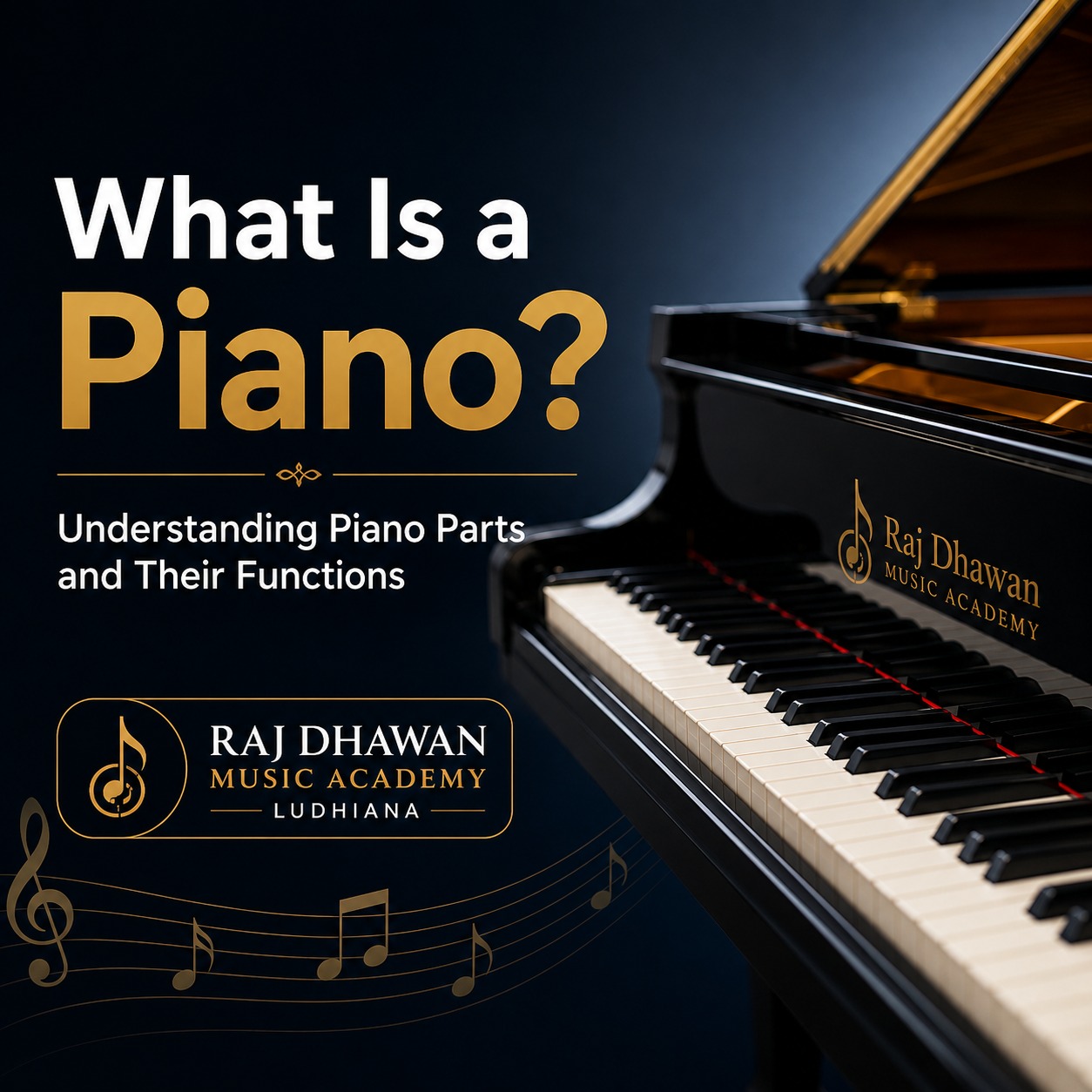
Have you ever wondered how a piano creates such beautiful music? Whether you’re planning to join piano classes in Ludhiana or simply want to learn more about this incredible instrument, understanding the different parts of a piano is the first step in your musical journey.
At Raj Dhawan Music Academy Ludhiana, we believe that every aspiring pianist should start with a strong foundation. In this guide, we’ll explore what a piano is, its major parts, and how each component contributes to producing music.
What Is a Piano?
A piano is a musical instrument that produces sound when its keys are pressed, causing small hammers inside the instrument to strike strings. It is widely used in classical, contemporary, jazz, and popular music.
The piano is loved for its versatility, allowing musicians to play melodies, harmonies, and rhythms simultaneously. It is one of the best instruments for developing a solid understanding of music theory and improving overall musicianship.
Main Parts of a Piano and Their Functions
1. Keyboard (Keys)
The keyboard is the most visible part of the piano and consists of white and black keys.
- White Keys: Represent natural notes (C, D, E, F, G, A, B)
- Black Keys: Represent sharps and flats
Function: Pressing a key activates the internal mechanism that produces sound.
2. Hammers
Inside an acoustic piano, each key is connected to a small felt-covered hammer.
Function: When a key is pressed, the hammer strikes the corresponding string, creating sound.
3. Strings
Piano strings are stretched tightly over a metal frame.
Function: Vibrating strings produce the actual musical tones you hear. Different string lengths create different pitches.
4. Soundboard
The soundboard is a large wooden component located beneath the strings.
Function: It amplifies the vibrations from the strings, making the piano sound richer and louder.
5. Pedals
Most pianos have three pedals:
Sustain Pedal (Right Pedal)
- Extends the duration of notes even after releasing the keys.
Soft Pedal (Left Pedal)
- Reduces the volume and creates a softer tone.
Sostenuto Pedal (Middle Pedal)
- Sustains only selected notes while allowing others to be played normally.
Function: Pedals help pianists add expression and depth to their performance.
6. Action Mechanism
The action mechanism is the complex system connecting keys, hammers, and other internal parts.
Function: It transfers the movement from the keys to the hammers with precision and speed.
7. Piano Frame
Modern pianos use a cast-iron frame.
Function: Supports the enormous tension created by the piano strings, ensuring structural stability.
8. Lid
Grand pianos have a lid that can be opened or closed.
Function: It projects and controls the direction of sound.
Why Should Beginners Learn Piano Anatomy?
Understanding piano parts helps students:
- Develop better playing techniques
- Learn proper piano maintenance
- Understand how sound is produced
- Improve communication with teachers during lessons
- Build a stronger musical foundation
At Raj Dhawan Music Academy Ludhiana, beginner students are introduced to piano anatomy alongside practical lessons to ensure comprehensive learning.
Piano vs Keyboard: Are They the Same?
Many beginners often confuse pianos with keyboards.
Piano:
- Usually has 88 weighted keys
- Produces sound through strings and hammers (acoustic models)
- Offers a more authentic playing experience
Keyboard:
- Electronic instrument with various sound options
- Generally lighter and more portable
- Often ideal for beginners and home practice
Both instruments are excellent for learning music fundamentals.
Tips for New Piano Students
If you’re just starting your piano journey:
- Practice regularly, even if only for 20–30 minutes daily.
- Learn correct finger positioning from the beginning.
- Understand basic music theory concepts.
- Use a metronome to improve timing.
- Seek guidance from qualified piano instructors.
Learn Piano at Raj Dhawan Music Academy Ludhiana
If you’re looking for piano classes in Ludhiana, Raj Dhawan Music Academy provides structured training for beginners, intermediate learners, and advanced students. Our experienced instructors focus on building strong fundamentals while making learning enjoyable and engaging.
Whether you dream of playing classical masterpieces, contemporary songs, or composing your own music, understanding the piano’s parts and functions is the perfect place to begin.
Final Thoughts
A piano is much more than just a set of keys. Every component—from the keyboard and hammers to the soundboard and pedals—plays a vital role in creating the beautiful music we love.
By learning how a piano works, beginners can develop a deeper appreciation for the instrument and accelerate their musical growth.
Ready to start your musical journey? Join Raj Dhawan Music Academy Ludhiana and take your first step toward becoming a confident pianist today.