One of the most common questions beginner piano students ask is:
“What is the best time to practice piano?”
Some people prefer practicing early in the morning, while others enjoy playing in the evening after a long day. The truth is that there isn’t one perfect time that works for everyone.
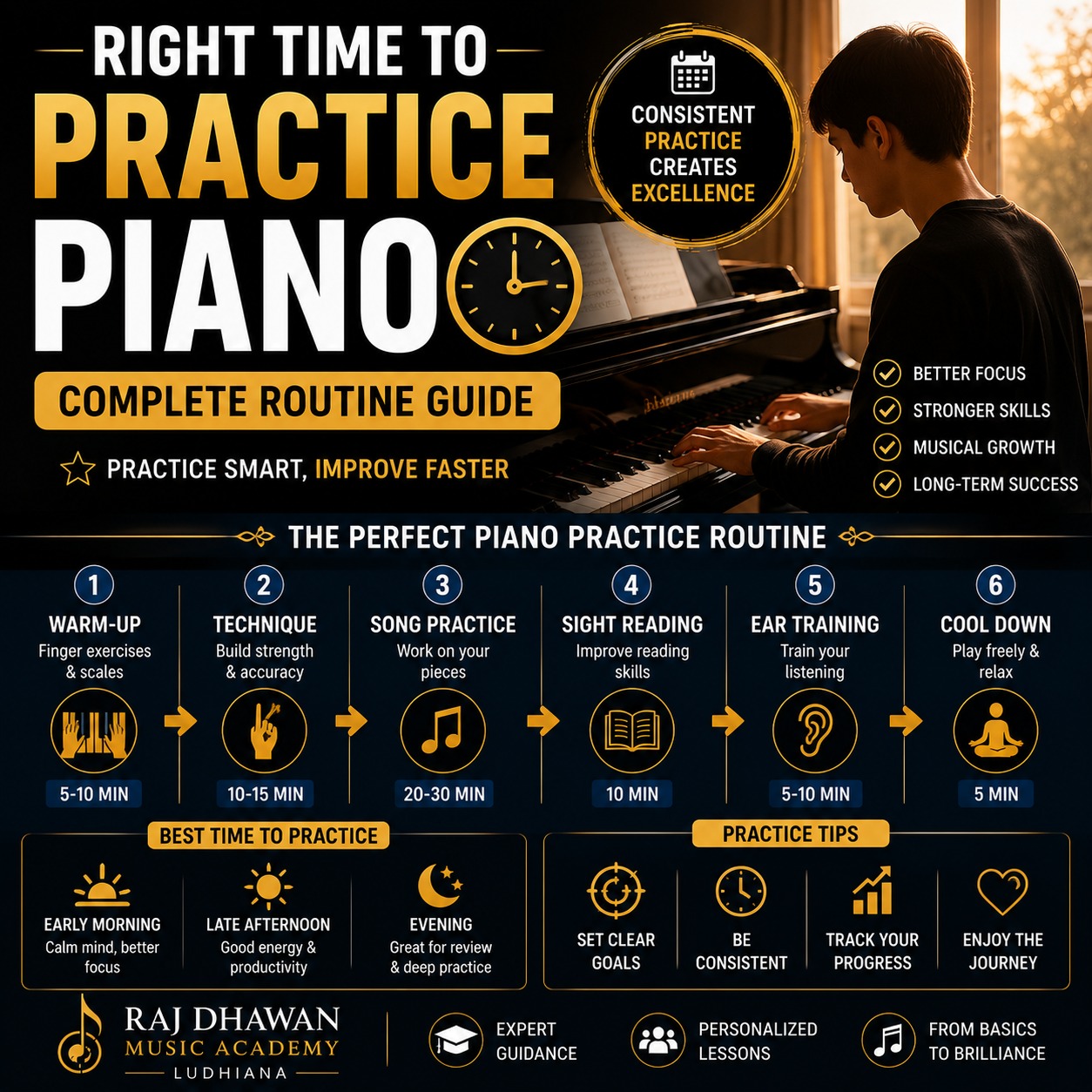
The best time to practice piano is the time when you can focus consistently, avoid distractions, and give your full attention to learning.
However, certain times of the day can offer unique advantages depending on your schedule, energy levels, and learning goals.
At Raj Dhawan Music Academy, students are encouraged to build a consistent practice routine because regular practice matters far more than finding the “perfect” hour of the day.
In this complete guide, we’ll discuss the best times to practice piano, how long beginners should practice, and a daily routine that can help you improve faster.
Is There Really a Best Time to Practice Piano?
The short answer is:
Yes and no.
There are times that may help you focus better, but consistency is always more important than timing.
A student who practices 30 minutes every day at 7 PM will usually improve faster than someone who practices randomly whenever they feel motivated.
The key is developing a routine your brain and body can follow regularly.
Morning Piano Practice: Benefits and Challenges
Many professional musicians enjoy practicing in the morning.
Why?
Because the mind is often fresh and free from daily stress.
Benefits of Morning Practice
Better Concentration
Your brain is typically less distracted early in the day.
Faster Learning
Many students find it easier to absorb new information in the morning.
Builds Discipline
Practicing before work, college, or school helps create consistency.
Creates a Positive Start
Music can improve mood and focus for the rest of the day.
Challenges
- Hands may feel stiff immediately after waking up.
- Some people are naturally more productive later in the day.
- Busy morning schedules can make practice difficult.
If you choose morning practice, spend a few minutes warming up your fingers before playing.
Afternoon Piano Practice
Afternoon practice works well for students who have completed their daily responsibilities.
Many school and college students find this time convenient.
Benefits
Increased Energy
The body is fully awake and active.
Better Finger Control
Hands often feel more relaxed compared to early morning.
Easier Scheduling
Many students have free time after classes.
Challenges
- Other activities may create distractions.
- Social commitments can interfere with consistency.
Afternoon practice is often ideal for students balancing studies and music lessons.
Evening Piano Practice
For many people, evening is the most realistic time to practice.
After completing work, school, or college tasks, students can focus entirely on music.
Benefits
Stress Relief
Playing piano after a busy day can be relaxing and enjoyable.
Longer Practice Sessions
Many people have more free time in the evening.
Creativity
Some musicians feel more creative at night.
Challenges
- Fatigue may affect concentration.
- Late-night practice can be difficult in shared living spaces.
- Energy levels vary from person to person.
Evening practice works extremely well if you remain mentally alert and focused.
The Real Secret: Consistency Over Timing
Many beginners spend too much time searching for the perfect practice time.
In reality, the best routine is simply the one you can maintain consistently.
Ask yourself:
- When do I feel most focused?
- When am I least distracted?
- What time can I commit to every day?
That answer is usually your ideal practice time.
How Long Should Beginners Practice Piano?
Another common question is:
“How many hours should I practice?”
The answer depends on your goals.
Complete Beginners
20–30 minutes daily
Beginner to Intermediate Students
30–60 minutes daily
Advanced Students
1–3 hours or more depending on goals
For beginners, consistency is far more important than long practice sessions.
Thirty focused minutes daily can produce excellent results.
The Perfect 30-Minute Piano Practice Routine
If you’re unsure what to practice, here’s a simple routine used by many successful beginners.
5 Minutes – Warm-Up
Start by relaxing your hands and fingers.
Practice:
- Finger stretches
- Five-finger exercises
- Simple note patterns
This prepares your muscles and mind for practice.
5 Minutes – Piano Note Review
Review:
- C D E F G A B
- Keyboard patterns
- Note identification exercises
This improves note recognition and keyboard familiarity.
5 Minutes – Scales
Practice simple scales such as:
- C Major
- G Major (later)
Scales improve:
- Finger strength
- Coordination
- Technique
Every skilled pianist practices scales regularly.
5 Minutes – Chords
Work on beginner chords such as:
- C Major
- F Major
- G Major
- A Minor
Chords form the foundation of countless songs.
5 Minutes – Rhythm Practice
Practice with:
- A metronome
- Counting exercises
- Simple rhythmic patterns
Strong rhythm is one of the most important musical skills.
5 Minutes – Song Practice
Finish your session by playing a song.
This keeps learning fun and allows you to apply everything you’ve practiced.
A 60-Minute Practice Routine for Faster Progress
Students who have more time can follow this structure.
10 Minutes
Warm-up exercises
10 Minutes
Scales and finger drills
10 Minutes
Chord practice
10 Minutes
Sight reading or note exercises
20 Minutes
Song learning and performance practice
This routine balances technical development and musical enjoyment.
Common Piano Practice Mistakes
Many students practice regularly but still progress slowly because of poor habits.
Practicing Without a Goal
Always know what you’re working on before sitting at the piano.
Playing Too Fast
Slow and accurate practice is far more effective.
Skipping Warm-Ups
Warm-ups prepare your hands and reduce tension.
Practicing Only Songs
Technical exercises are equally important.
Practicing Inconsistently
Three hours once a week is less effective than thirty minutes daily.
Should You Practice Piano Every Day?
Yes, if possible.
Daily practice helps develop:
- Muscle memory
- Finger strength
- Hand coordination
- Rhythm
- Confidence
Even 15–20 minutes a day can create significant improvement over time.
Remember:
Consistency beats intensity.
Tips for Staying Consistent
Set a Fixed Time
Practice at the same time every day.
Create a Dedicated Practice Space
A comfortable environment encourages regular practice.
Track Progress
Celebrate small improvements.
Focus on Enjoyment
Don’t make practice feel like a chore.
Stay Patient
Musical growth takes time.
Why Professional Guidance Helps
Many beginners don’t struggle because they lack talent.
They struggle because they don’t know what to practice.
A qualified teacher can:
- Create a structured routine
- Correct mistakes early
- Improve technique
- Keep students motivated
- Provide personalized guidance
This is why students searching for:
- Best piano classes in Ludhiana
- Piano lessons for beginners
- Keyboard classes in Ludhiana
- Best music academy in Ludhiana
- Music classes in Ludhiana
- Piano teacher in Ludhiana
often achieve better results with professional instruction.
Learn Piano at Raj Dhawan Music Academy
At Raj Dhawan Music Academy, students learn piano through a structured approach designed to build both technical skills and musical confidence.
The piano program includes:
- Piano note learning
- Finger exercises
- Scale practice
- Hand coordination training
- Chord mastery
- Rhythm development
- Song performance
Students receive personalized attention and practical guidance, helping them develop effective practice habits from the very beginning.
Whether you’re learning piano as a hobby or aiming for advanced performance skills, the academy provides a supportive environment for learners of all ages.
Why Students Choose Raj Dhawan Music Academy
Students searching for:
- Best piano classes in Ludhiana
- Best music academy in Ludhiana
- Keyboard classes in Ludhiana
- Piano lessons in Ludhiana
- Music classes in Ludhiana
- Professional piano teacher in Ludhiana
- Online piano classes Punjab
often choose Raj Dhawan Music Academy for its practical teaching methods, experienced guidance, and personalized approach to music education.
The academy also offers:
- Guitar Classes
- Vocal Training
- Harmonium Lessons
- Tabla Classes
making it a complete destination for aspiring musicians.