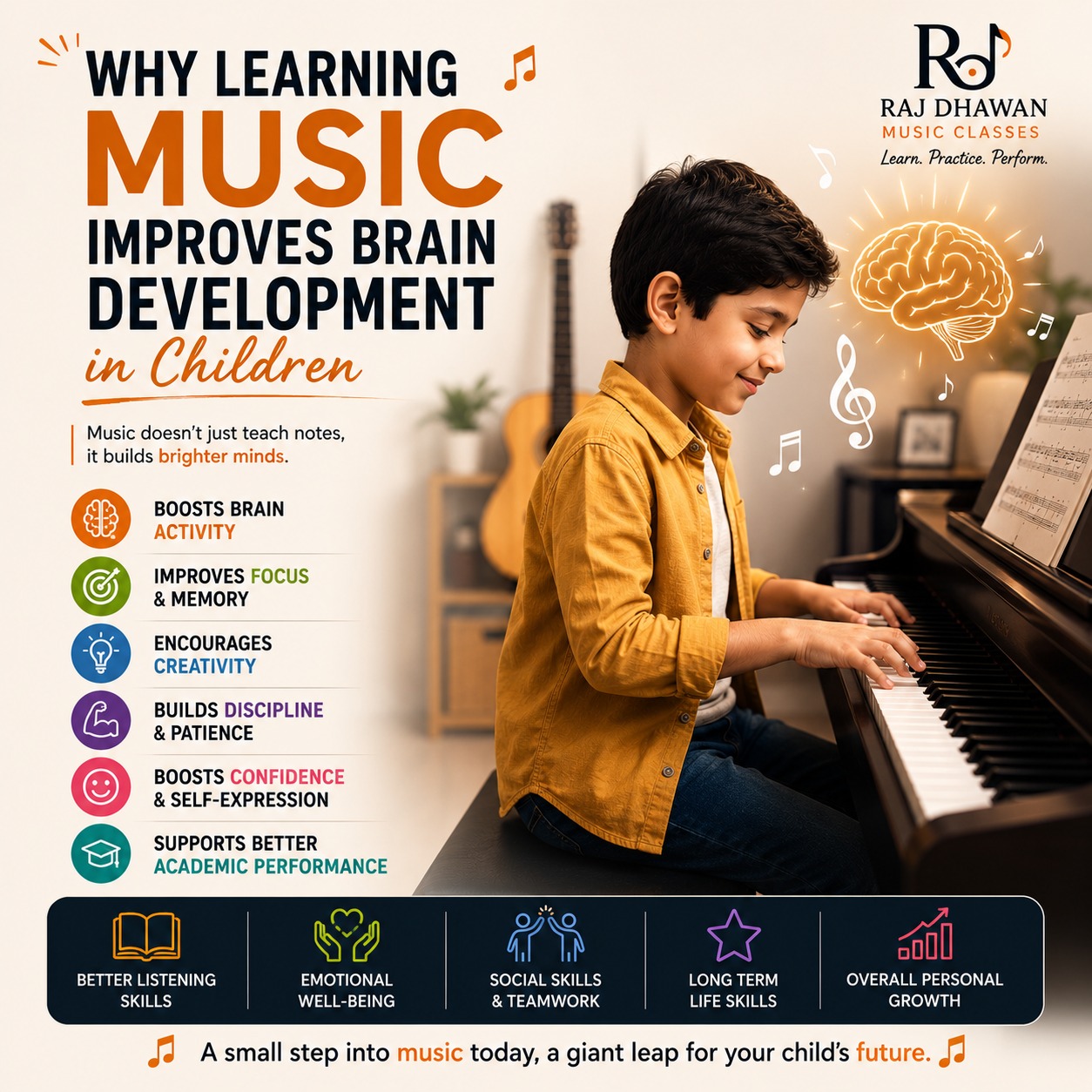
Why Learning Music Is One of the Best Gifts You Can Give Your Child
Introduction
Every parent wants their kid to have something special in their life. School’s important, sure, and so are homework and sports. But music? That’s in a league of its own. It’s not just another chore squeezed into the week. Music genuinely changes the way kids think, handle stress, and see the world.
If your child is always humming, fiddling with a guitar, or banging away at the piano, you probably get it. The specific instrument doesn’t matter. What matters is they’re making music because they love it, not just memorizing tunes for a test. Plenty of research backs this up. Music improves memory, sharpens focus, sparks creativity, and, maybe most valuable, builds serious determination.
So if you find yourself scrolling through “music academy Ludhiana” or “music classes near me,” wondering what to do next, keep this in mind. Music lessons are about so much more than notes on a page.
The Brain When Music Comes Alive
Music lights up the brain like nothing else. When kids play, they’re listening hard, keeping time, moving their hands, finding patterns, thinking ahead. It’s a full on workout for their minds. Just about every skill gets called up.
Stronger Memory, Better Focus
Learning new music is a challenge. Between working out chords, remembering lyrics, and getting fingerings right, kids have to concentrate. Over time, that kind of focus shows up everywhere. They read better, finish homework faster, and juggle tasks with more ease.
Real Resilience
Nobody starts out a pro. Some days feel impossible. Wrong notes, stuck fingers, total irritation. But music teaches kids to break tricky things into pieces, stick it out, and not to quit. That grit goes way beyond music class.
Good Habits for Life
Improvement comes from showing up again and again, even for just a few minutes every day. Kids build routines, set goals, and learn to track their own progress. These habits come in handy in every part of life.
Letting Creativity Out
Yes, music has rules, but there’s room for experimenting. When kids try inventing their own stuff or improvising, they start thinking in new ways. That creativity sticks with them, whether they’re solving math problems or coming up with ideas for projects.
Body and Mind Work Together
Playing music is a full body thing. Head, hands, and eyes, all in sync. Piano, guitar, violin, whatever they choose, they’re building quick hands, sharp eyes, and better coordination. You’ll notice it outside music too, like in sports, neat handwriting, or just feeling more in control of their movements.
Confidence in Every Step
Every song they learn, every tough spot they master, gives them a real boost. They might start shy, playing only at home, but soon enough, they want to play for friends or on stage. They learn how to handle nerves and feel proud of what they’ve done. That confidence isn’t limited to music.
A Safe Outlet for Emotions
Not every kid likes to talk, and that’s okay. Sometimes, music says what words can’t, whether they’re happy, sad, or frustrated. Lots of parents notice it. Kids who play music seem more comfortable just being themselves.
Really Listening
Music isn’t just background noise. It’s careful listening, catching the tiny details, picking up on rhythms and patterns. Before long, kids start listening better to people, at home, with friends, and in school.
How It Helps in School
Music lifts memory, focus, and self control. Grades tend to climb, and not just in music, but across the board.
Teamwork and Actual Fun
Music can be a group thing, too. Bands, duets, jam sessions, kids learn how to lead, when to follow, and how to share the spotlight. Best part? They’re usually having a ball while they do it.
Music Clears the Mind
Kids have rough days too. Music gives them a real break. A time to unwind, shake off stress, and just enjoy something that’s theirs.
Why a Good Teacher Means Everything
YouTube’s great for basics. But nothing compares to having a teacher cheering your kid on, catching mistakes, and making music lessons something they look forward to. The right teacher transforms music from a chore into something your kid genuinely loves.
Guitar or Piano?
Both are winners. If your kid wants to sing along and carry their instrument everywhere, try guitar. If they’re into melodies and digging deep into music, piano’s perfect. What matters most is that they’re excited about what they pick.
Why Raj Dhawan Music Classes?
We see your kid as more than just another face in the room. Our goal is to help kids build confidence, discipline, creativity, and, yes, solid music skills.
At our academy, you’ll find:
- Energetic lessons for beginners
- Honest feedback
- Chances to perform
- Both in person and online options
Still searching for “music academy Ludhiana” or “music classes near me”? We’re here to get your child started with music and make sure they love every minute.
FAQs
When’s the right age to start?
Five or six is great. Kids are curious and ready to learn.
Does music really help in school?
Definitely. It boosts memory, focus, self control, and problem solving. All of that makes school easier.
Which is better for the brain, guitar or piano?
Both help. It’s the commitment and the teacher that matter more than which instrument you choose.
Can music help shy kids?
Absolutely. It gives quiet kids an easy way to open up and feel confident.
Do online lessons work?
They do, especially when you have a good teacher and a little support from parents at the start.
One Last Thing
Music isn’t just another hobby. It helps kids think fast, focus better, get creative, and build real confidence. Whether your child dreams of performing or just wants to try something fun, music lessons make a difference. Pick a school you trust, work with teachers who care, and watch your kid grow in ways you never expected.